Welcome…

The volunteers of the Clara Vale Conservation Group (CVCG) look after the Clara Vale Nature Reserve & Community Orchard, adjacent to the village of Clara Vale, near Gateshead, Tyne and Wear. The 7.5 acre Local Nature Reserve is a haven for a rich variety of resident and visiting wildlife, flora and fauna. Here you can find out about what we do, what you can see and how we can all help to ensure the Reserve and Community Orchard thrives for future visitors to enjoy.

(Charity number: 1201323)

Minutes of the Clara Vale Conservation Group AGM – 13th July 2026

Chair’s Welcome

The importance of the Nature Reserve was highlighted due to the increasing pressure on nature. We need the Reserve to preserve nature, and for people to have green space. Reminder that the Reserve is a LNR (a nationally designated title) which protects rights for nature and people. Thanks were expressed to all those who help to look after the Reserve and Orchard, and to Rose and Jess for the Nature Club that are investing in the conservationists of the future. The importance of the Orchard as a community space was raised, along with teaching skills for growing food.

Skills in coppicing, scything and nature conservation were highlighted, along with opportunities for learning. As the Reserve is quite a small space, with multiple habitats, these skills are necessary to preserve the space rather than “rewilding” ie leaving the space entirely to nature. The importance of volunteers was highlighted to maintaining the balance of habitats.

Thanks to Dot for tireless volunteering, and to Penny for her financial skills as Treasurer. Finally, thanks are expressed to all who contribute to the group.

Don Atkinson
Chair

Clara Vale Local Nature Reserve Annual Report

The nature reserve continues to flourish. And we continue to get praise and thanks from visitors.

It remains a mix of habitats created from the old Clara Vale pit yard. We have a new thirty five year Lease from Gateshead Council to manage the reserve having managed it for the previous 35 years.

As we’ve said in the past, it remains the mix that it is because of careful management by the volunteers who coppice, clear scrub, scythe and rake, primarily throughout the autumn and winter. Many thanks to everybody who has helped,.Without your help, by now the reserve would be mostly scrub and woodland.

There have been no great changes over the past year. The roof on the Alex West Hide was replaced in November. Thank you to everybody who donated to the cost of the replacement. The hide continues to attract many visitors particularly photographers trying to get the ultimate photo of a kingfisher. But many visitors just want to sit quietly and enjoy the wildlife and the view across the river valley. The Woodland Hide attracts fewer visitors. In summer it is very quiet but when we start feeding the birds in late October there is much more to see. In particular, it is used as a base for visits by the Northumbria Ringing Group led by Richard Barnes. Their ringing sessions give visitors a rare opportunity to see birds very close up and find out about how and why birds are ringed and are greatly enjoyed particularly by the children who come along. The Ringing Group is also very appreciative of the interest shown in what they do and the questions visitors ask. We expect the monthly ringing sessions to start again in November, usually the first Saturday or Sunday in the month, through until April. We’ll let you know nearer the time. If you haven’t been, go along: you’re in for a treat.

Between June last year to Date, the Ringing Group have ringed 154 new birds and recaptured 90 previously ringed birds. All of the latter had been previously caught and ringed in the reserve. The new birds include a kingfisher, 2 goldcrests, 1Yellowhammer, 5 redwing , 1 siskin, 1 nuthatch, 2greenfinch. and a great spotted woodpecker. The most frequently ringed birds are blue tit 73, great tit 20, robin13 and coal tit 12.
Richard Barnes also monitors the 37 nest boxes in the Reserve. The boxes were originally put up for tree sparrows, a bird that has declined by 93% since 2008, and they were very successful for several years with many boxes being used several times each summer. Around 600 tree sparrow chicks were ringed over six years. In 2023 the numbers crashed and only 3 boxes were used since then no tree sparrows have bred in the reserve and now are very rarely seen.
This year 18 boxes have been used but only by blue tits and great tits. The blue tits have raised 72 young and the great tits 24. Many thanks to Richard and the Northumbria Ringing Group for their support.

Other bird highlights: Ring necked parakeets were very visible and audible around the Reserve and in the village throughout the winter and spring with up to 5 being seen. Over the past two months they have been seen less, presumably having failed to find suitable nest sites locally. They may get established here but there very few suitable nest holes in the reserve. They are more likely to find somewhere in Eels Wood. There is still very little evidence that they having an impact on native species but that could change. Little egrets are now being seen fairly regularly. And Buzzards successfully bred nearby and are frequently seen over the village.
The hides are a great place to sit and watch birds and other wildlife. You will need a key which also gives access to the four other hides in Gateshead.

Unfortunately the Woodland Hide has suffered some vandalism, the door was partly kicked in but it’s been repaired.

Flora

A big attraction of the Reserve is the variety of wild flowers that can be seen. Whilst there is nothing particularly rare, it has a rich diversity in what is is a very small area (around 6 acres). Because of the mix of habitats and our management of the reserve, around 200 flowering plants have been recorded.
The species mix does change over time. This year the has been a good show of ox-eye daisies in the paddock and ragged robin has returned to the pond edge in the main reserve. Orchids are still present but not in the same numbers as in the past. Three species can be seen: Northern Marsh Orchid, Common Spotted Orchid and Broad-leaved Heleborine.

Butterflies, moths etc

Seventeen butterfly species have been recorded in the reserve. Over the years we have lost some: Dingy Skipper and Wall but gained a couple: Ringlet and Speckled Wood. Climate change is one of the drivers so it is likely we will gain and lose a few more in the coming years.

There are 2500 different moths in the UK compared with 57 different butterflies. Their importance as pollinators is increasingly recognised. David Howden has had several overnight trapping sessions in the Reserve and has caught 158 species.
We put on a demonstration for the Nature Club in September and were able to show the children 58 different moths caught the previous night. As the children discovered, moths come in all shapes, sizes and colours, not just the little brown jobs that are clothes moths. We hope to be able to have another mothing demonstration later this summer. We’ll keep you informed. Thank you to David and Penny and Colin for the use of their garden.

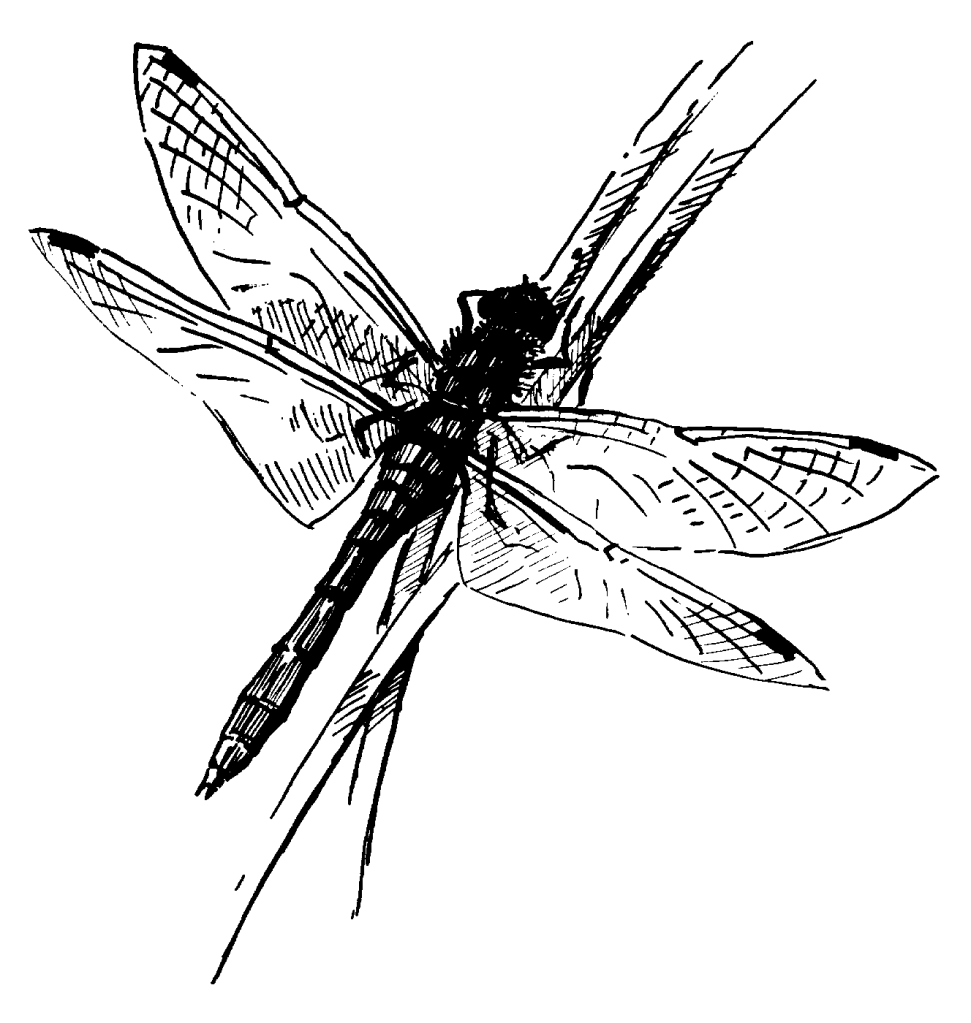
As well as butterflies and moths, dragonflies and damselflies are the other big visible insects you can see in the reserve. Seven different dragonflies and and six different damselflies have been recorded here. There are only 56 different species in the UK so this is a decent number for such a small reserve and again reflects the variety of habitats here.

There are of course many, more, beetles, flies, spiders, bugs, slugs and snails waiting to be discovered in the reserve. For example there are around 6000 different flies and 4000 different beetles. Identifying them is a challenge

Mammals

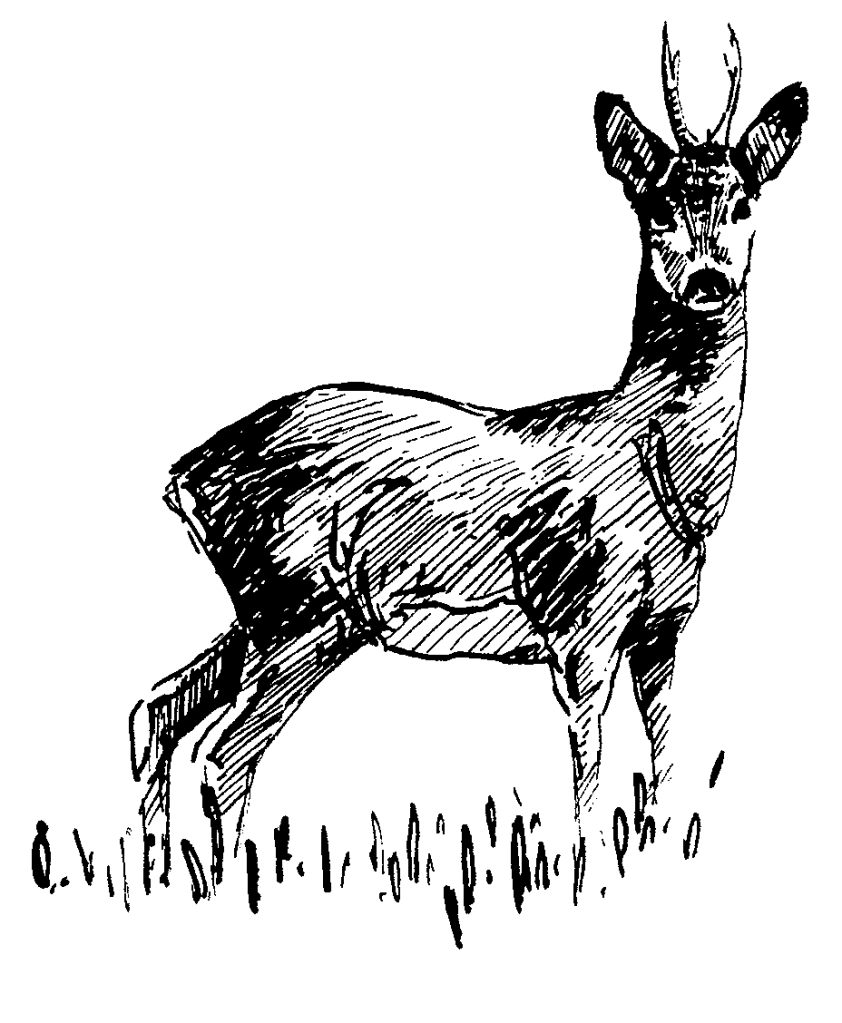
The largest mammal you are most likely to see in the reserve is a roe deer. Over the winter and spring a family of a doe, two well grown fawns and a stag could be seen most days. They seemed much less wary of humans than usual. Grey squirrels and rabbits are the other most seen mammals but there are voles, mice and shrews keeping out of sight in the grass and scrub. Badgers are active in the reserve as their diggings along the footpaths show, but they are not often seen. Foxes are here but seem to have become scarcer or more wary of humans or have become urban foxes.
Bats can be seen at dusk. They are mostly the Common and Soprano Pipistrelles but there is also Daubenton’s Bat which can be seen feeding over the ponds and the Noctule Bat which is one of Britains largest, with a wingspan of up to 45cms.

Stoats and weasels are occasionally seen, most frequently from the Alex West hide, hunting around the edge of the pond.

Amphibians

Frogs remain scarce in the reserve. Toads are far more common. Autumn can see hundreds of toadlets only about half an inch long wandering around the reserve looking for somewhere to hibernate. It will be 5 years before they are ready to breed. Most of that time is spent out of water. The smooth newt is the only newt we have in the Reserve. Great crested newts haven’t reached here yet from the ponds on the other side of the village.

Conclusion

Although the Reserve is small it provides a valuable haven for wildlife increasingly threatened by urban spread and intensification of agriculture. It is also a resource to the wider community. The value of spending time surrounded by the natural world is now widely accepted as important for helping improve mental health. We’re lucky to have it on our doorstep, go out and enjoy it.

Gordon Pollinger

Community Orchard Annual Report

Weather

The hot dry weather in 2025 was a significant challenge with the trees and other vegetation showing significant signs of stress. Perhaps the only positive was that the paths needed less strimming and the apples, that whilst quite tart, were abundant and made lovely juice. 2026 has been a little kinder weather wise. Although the ground is still very dry and the pond needs regular top ups, the trees and vegetation seem healthier.

Pruning

The orchard and fruit trees are now starting to look well managed, with good open “goblet” shapes and mostly good picking height thanks to all the volunteers hard work on pruning days over the last few years. We continue to get a good number of volunteers turning up for pruning days, winter and summer. Details of summer pruning day coming soon.

Apple Day

Apple Day 2025 was a huge success, with sweet apple juice (with Josh enthusiastically leading the juicing volunteers) and apple fritters (courtesy of Don giving John a well earned rest). There was a genuine sense of community as people worked together to make the juice, it was really palpable. Perhaps the highlight though was the children’s musical parade from the Hall to the Orchard, something that I think made everyone smile. Thank you to everyone who helped make this one of the best apple days in my memory, from those helping out in the Hall with refreshments or children’s activities, to making juice and fritters in the Orchard, to everyone in the community who came and brought all their joy and enthusiasm.

Pond

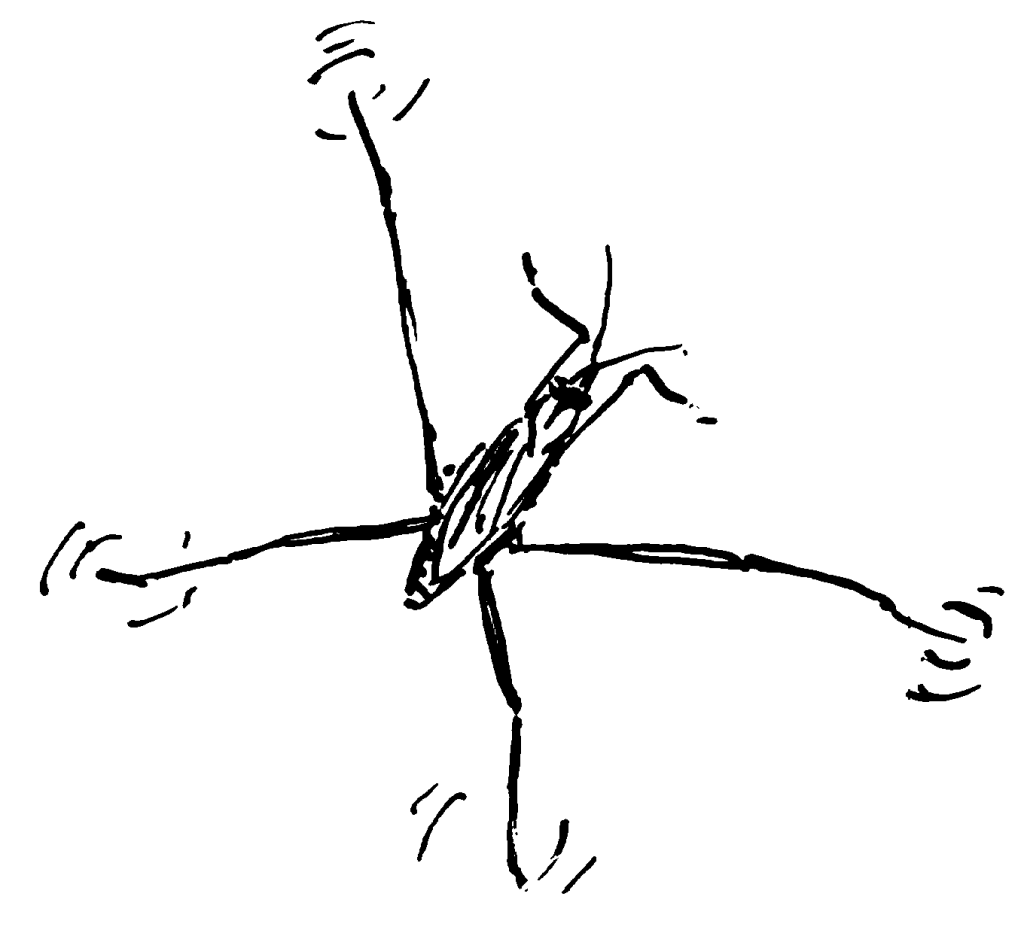
The pond continues to establish with less green algae this year as the water finds balance. The natural water flora colonisation is going well and I have added some additional water plants and oxygenators over the last year to accelerate the colonisation process. Observed wildlife regularly includes damselflies, dragonflies, water boatmen, pond skaters, beetles and smooth newts. No sightings of the great crested newts this year, but they are harder to see due to the increase in pond vegetation.

Biodiversity plan

There isn’t a huge change in casually observed wildlife or wildflowers, but the path edges are full of wildflower colour throughout the spring and summer, and the wildflower bar created by Nature Club was awash with colour this year, and I’m hoping some of the seed will spread out into the orchard.

Volunteering

Regular tasks including strimming the paths to maintain safe access, topping up the pond in hot weather and regular safety checks and remediation.
As the orchard manager I didn’t have much time in last year due to other commitments and so the volunteer activities has been much reduced apart from the above mentioned Apple Day and Pruning Days.
I’m hoping to have more time for the rest of 2026 and am thinking about some previously discussed larger projects including restoring the steps to the upper slope to have an additional quiet bench, and maybe a second pond or something else in the far triangle that is mostly raspberry canes. Keep an eye on the Orchard email list for updates.

Community Feedback

I don’t receive much feedback about the apples or membership scheme, but I continue to regularly hear from people in the community that they appreciate being able to go and sit quietly in the orchard, or they enjoy taking visiting friends to see our community orchard, or they value taking their children for some “together” time.

Mike McFarlane
Community Orchard Shepherd

Nature Club Annual Report

We are now into our 5th successful year of Nature Club. This year 17 children have attended with an average of 9 children at each session. We continue to meet once a month on a Saturday morning usually in the Nature Reserve but sometimes in the Community Orchard, the Centenary Garden or in the grounds of the Village Hall.

This year we have had a particular focus on working towards the Green Tree Badge award. This is a national initiative promoted by the Royal Forestry Society and Bag of Ethics. Each month we have taken one of the topics from the Green Tree Badge activity book and made it relevant to our environment here in Clara Vale. We have measured trees in the Village Hall to estimate their age and height discovering that they were probably planted when the school (now the Village Hall) first opened around 1900. We also looked at photos of the pit site when the Clara Vale mine was closing in the 1960s. We used the photos to investigate how nature has reclaimed this industrial site and how it has been transformed into a nature reserve. In the Autumn, working with the village volunteer garden team, children raked up the leaves in the Centenary Garden creating heaps which will become leaf mould to mulch the plants in a year’s time. By the end of June, thirteen children had completed a wide range of challenges for their Green Tree Badge award. We held a celebratory afternoon tea in the Village Hall where the children were presented with their badges. Some of the children ran their own fund-raising stalls.

Another highlight of the year was the unveiling of the Apple Day banner made with printed fabric squares designed by the children. On the afternoon of Apple Day in October, families gathered for a procession with the banner from the hall to the orchard with children playing percussion instruments. This was a fitting celebration on the 25th anniversary of our community orchard.

One of the unique aspects of our nature club is its connection to the conservation group. Joining in with conservation projects or observing conservation group volunteers on task days; benefitting from the expertise in the group e.g. for the moth investigation session and learning about how the bird boxes are cleaned and managed to support the bird population are all ways that children are developing a sense of themselves as nature conservationists.

Looking forward to the next year we know there are several four-year olds who will be joining us in September. We will continue to plan around the seasons and respond to what is happening in our green spaces around the village. Children and their parents enjoy the quiet and reflective character of Nature Club. It is an oasis of place and time where children can be immersed in nature away from the business of life and school. Our older cohort of children have developed their knowledge and understanding of wildlife and conservation. For now, they continue to enjoy the group. The wide age range works well for all the children with our older ones taking more of a lead and making suggestions for topics and the younger ones enjoying participating alongside the older children.

Rose Davies and Jess Lloyd
Nature Club leaders

CLARA VALE CONSERVATION GROUP NEWSLETTER SPRING 2026

Nature Reserve

Spring has sprung and wildlife in the Nature Reserve is stirring. The clouds of blackthorn blossom have faded hawthorn blossom is starting to appear.

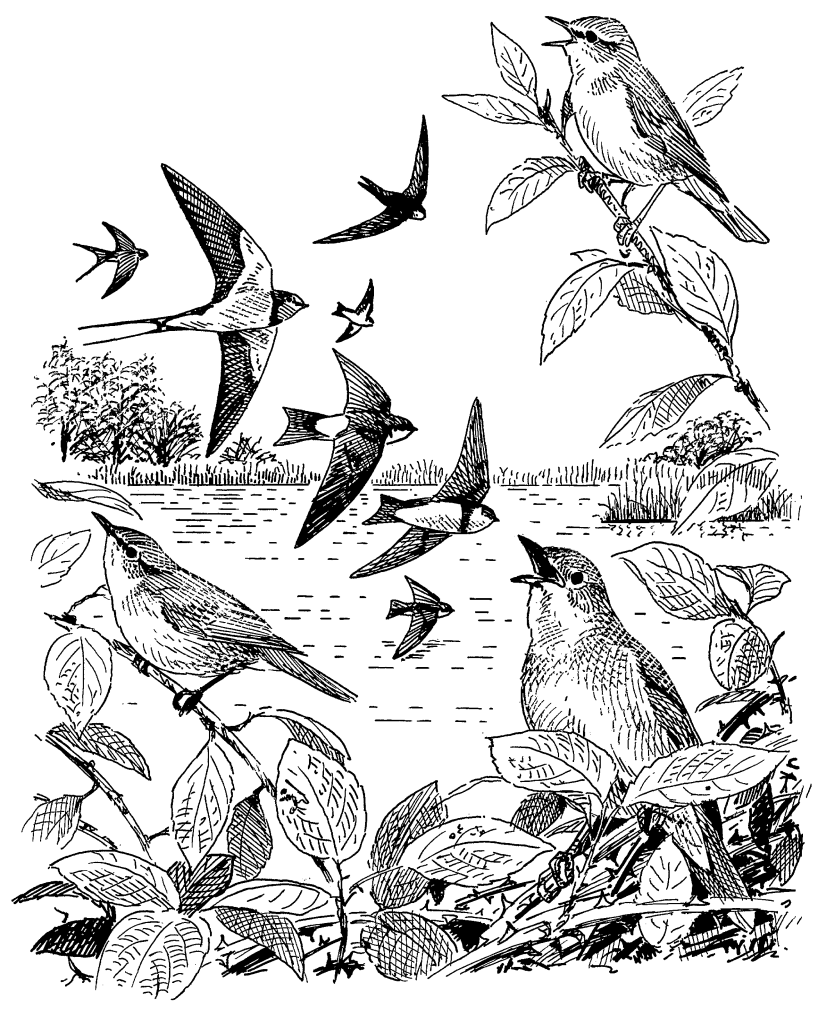
Birdlife in the reserve is much noisier. Chiffchaffs and blackcaps and willow warblers have made the journey from Africa and southern Spain to nest here. The mix of habitats in the Reserve means that a greater variety of song can be heard in the Reserve compared with, say, a walk up the Black Ashy (footpath 101) which is surrounded by farmland. If you have the Merlin birdsong app on your phone (and if you haven’t it’s well worth getting: https://merlin.allaboutbirds.org/) a walk around the Reserve with the app can often show as many as fifteen or more different birds are singing or calling. Walk along the Black Ashy and you might only hear half a dozen or so.

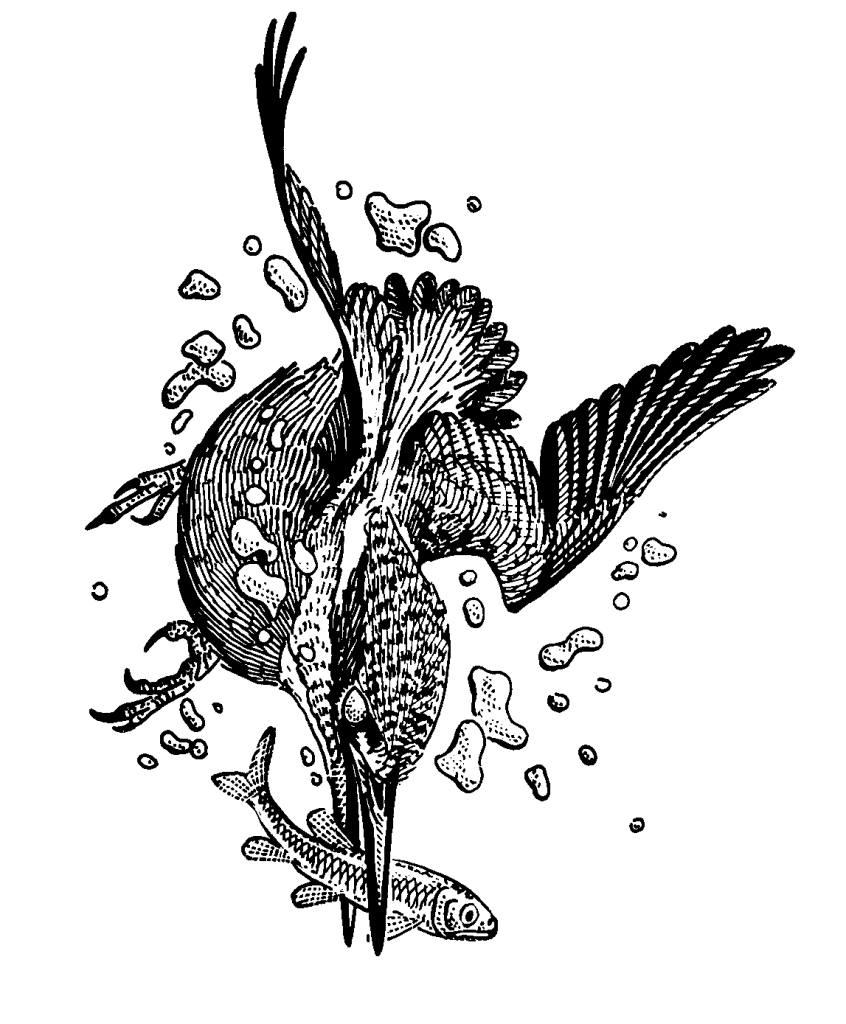
Kingfishers visiting the ponds to feed on sticklebacks continue to attract visitors from far and wide, particularly photographers trying to get the perfect shot. They are best seen from the Alex West Hide. If you want a hide key call Gordon on 07946302571 or call in at the Thornley Woodlands Centre.

The roof on the Alex West Hide was in a poor state so we replaced it rather than try to repair it. It should last last at least another 25 years. A big thank you to everybody who made a donation to the hide roof fund.

Following RSPB advice we will stop feeding the birds around the beginning of May to reduce the spread of bird flu. We hope to be able to resume in October.

Richard Barnes and the Durham Ringing Group visited regularly over winter demonstrating how they catch and ring birds..Once again it has proved very successful. We hope the Ringing Group will be visiting next winter. We’ll let you know.

You have probably seen the bright green, ring-necked parakeets around the village. There have been up to five.. What impact they have, if any, on other birds is still not clear. But as their numbers across the country are increasing rapidly, by 2400% between 1995 and 2023, it seems likely they will compete for food and nesting holes. https://www.bto.org/learn/about-birds/

Roe deer are being seen very regularly and seem to be much less nervous than in the past and allow you to watch them from quite close quarters. They are a mixed blessing. Whilst they are lovely to look at, they can do a lot of damage to trees, particularly to our coppicing efforts!

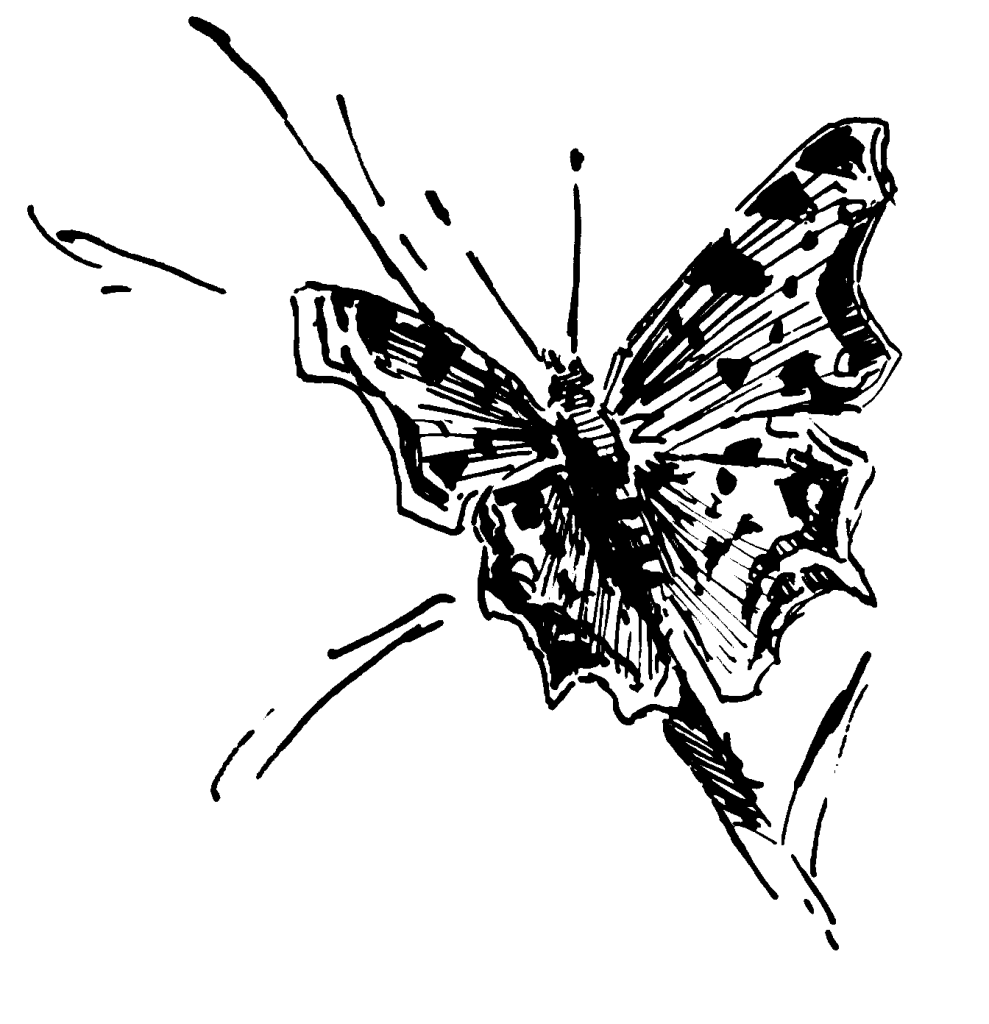
Butterflies have been emerging in the warm weather. Look out for orange tip, comma, peacock and small tortoiseshell.. If you’re lucky you might also see the tiny Holly Blue. It’s a lovely pale blue and tends to be seen around holly and ivy. Their names give a clue to identifying them. The male orange tip is a small white butterfly with orange tipped wings (the female lacks the orange tips). The peacock’s wings has “eyes” like a peacock’s tail. The comma is a bit more subtle. It’s is easy to identify by it very ragged, orange-brown wings. But it gets its name from a small white comma on its underwing which is a bit harder to see.

The Community Orchard

Everyone goes to the orchard at harvest time but don’t forget to go right now when the trees are in blossom. It’s a stunning sight and a feast for the senses too. Just take a moment to stand still and listen to the birds singing and the pollinating insects buzzing around. Then breath in to catch the scent of the blossom and wild flowers.

In recent years there have been lots of developments to encourage even more wildlife into the orchard. The pond was dug and is now an established habitat for newts. The pond also attracts dragonflies and damselflies along with many other invertebrates which in turn pollinate the blossom to ensure a good apple harvest every autumn. Elsewhere in the orchard nature club children have created a large bug hotel and a wild flower mound. There are reptile mats and log piles all designed to support an array of wildlife.

Please remember to keep children safe around the pond area. Also, please do not disturb the pond as there are protected species living in it. Do not walk around the back of the pond or climb on the stone wall. Moss is growing on the wall and it is becoming another vital habitat for a range of creatures throughout the seasons. Thank you for your co-operation.

So, take a stroll down to the orchard early one morning or as the sun sets and enjoy this very special community space. Tread gently with respect for the animals and plants that have made a home there.

Children’s Nature Club

The children’s Nature Club meets once a month on a Saturday morning in the nature reserve. We’ve been running now for over 4 years and lots of village children have attended over that time. We love welcoming new children as they reach their fourth birthday.

Over the past year children have been working towards their Green Tree Badge. This is a Royal Forestry Society initiative. We have learnt many facts about trees e.g. how to estimate how old a tree is, how tall it is and how it provides shelter for so many animals. We’ve come to appreciate how important trees are to our world and the climate. We’ve also enjoyed the magic of being in woods, sharing stories and poems and being creative. A few weeks ago, we made fairy dens around the old horse chestnut trees.

On Sunday 28th June we will be holding a celebration afternoon tea in the Village Hall to present children with their Green Tree Badges. Keep this date clear to join us for cakes and scones and find out more about Nature Club.

For more information about Nature Club contact Rose on 07934869548

Dogs on leads

Just a reminder if you’re a dog owner to keep your dog on a short lead through the Reserve. Quite a few of the birds that nest here have their nests on or close to the ground and will desert their nest if disturbed. Thank you.

The AGM this year is scheduled for July 13th. in the Village Hall. Time to be confirmed. We’ll be pinning up notices nearer the date..Do come along if you appreciate the Reserve. You might like to come on to the committee or become a Trustee.

We need your help!

To keep the Reserve and the orchard looking as lovely as they do at this time of the year we need volunteers to help us scythe, strim and coppice. No previous experience needed.If you would like to help, get in touch with Don on 07709820907 or Gordon on 07946302571.

We depend on donations for bird food, tools and repairs. If you would like to donate to help us look after the Reserve and Orchard our bank details are:

Lloyds Bank, Sort code: 30-19-54, a/c No. 01477367.

Thank you.

Charity Registration No. 1201323

Charity Commission Report 2024 – 2025

Purposes of the Charity

To promote for the benefit of the public, the conservation, protection and improvement of the physical and natural environment of Clara Vale and its surrounding area including the the promotion of environmental diversity and contribution towards conservation work nationally. To advance the education of the public in the conservation and protection of the physical and natural environment.

Main Activities

  • Management of the Clara Vale Local Nature reserve to maintain and Improve biodiversity.
  • Allow and encourage public access to the Nature Reserve to observe its wildlife
  • Through the Nature Club, provide an opportunity for children and their parents or carers to experience and explore the natural environment.
  • Management of the Clara Vale Community Orchard.

This, we believe, conforms to the Commissions guidance on public benefit, PB1.

The Nature Reserve and Community Orchard are freely open to the public at all times.

Contribution made by Volunteers

The Conservation Group is entirely dependent on volunteers to care for the Nature Reserve, the Community Orchard and run the Nature Club.There are no paid employees.

For the period of this report volunteers have given a total of 142 days days of their time to running the Conservation Group.

An approximate breakdown is as follows:

  • Managing the nature reserve: 59 days
  • Managing the Community Orchard: 47 days
  • Running the Nature Club: 18 days.
  • Administration 18 days

This is likely to be an underestimate as volunteers contribute to the Conservation group in ways they do not think is volunteering such as talking to other agencies, producing notices for events, advertising activities on social media etc.

We are very grateful for the many hours volunteers have given to the Group, which, for a small village, is exceptional.

Governance document.

Constitution adopted 10th June 2024

How the charity is constituted

Charitable Incorporated Organisation.

Trustee selection method.

Trustees are appointed or reappointed at the AGM in June and at other times as required.

Our main achievements and activities May 2024-2025

The Reserve continues to be a haven for wildlife compared to the intensively farmed fields surrounding us. And we continue to receive appreciative comments about it as a place to enjoy nature.

The wildlife in the reserve appears to have followed national trends which, sadly, is a decline in biodiversity, with a few exceptions.

Flora

There is lots of “Nature” in the Reserve. One of the reasons it is of value is because of the variety of plants it contains in such a small area. The Reserve is only about 9 acres there are around 200 different flowering plants.

There are also mosses, fungi and lichens which we have yet to identify. Cutting the meadow areas and controlling the scrub is how we maintain this diversity.

Without this management the reserve would by now be mostly scrub and woodland .

Apart from the group’s management, the variety of plants comes about from the mix of habitats, and that it has never had herbicides or fertiliser spread on it.

Small pockets of grassland and scrub survived the 70+years it was the site of a coal mine, enough to seed much of what is there now. Today, were it not a Local Nature Reserve, it’s likely it would be classified as a brownfield site, ripe for development.

There’s nothing particularly rare on the reserve but it is rich assembly of plants, probably one of the best in Gateshead Borough.

Birds

There are 37 nest boxes in the reserve. We put them up to attract tree sparrows, a bird that has declined nationally by 93% since 2008. This was very successful with around 600 nestlings ringed between 2016 and 2022. In 2023 there was a crash in numbers and only three boxes were used. !n 2024 only one box was used and it was unsuccessful the young were found dead in the nestbox. This year no boxes have been used by tree sparrows. And they have been rarely seen or heard. Bird flu could be a cause, If so as the numbers hopefully will recover we will see them using the boxes again. The big decline in insect numbers is also a likely cause. with not enough young birds surviving to maintain the population. Tree sparrows mostly eat seeds but they feed their young on insects. If that’s what’s behind the crash in numbers, it could be a long time before we see tree sparrows back in the Reserve

Last year the boxes were taken over by blue tits and great tits. Blue tits used 12 of the boxes and raised 42 chicks. Great tits used 7 of the boxes and raised 18 chicks. We’ll have to wait to see what the coming year brings but so far it is not looking promising.

Apart from monitoring the net boxes, the Northumbria Ringing Group visits monthly between November and April over the winter months demonstrating to the public what ringing birds involves and why it is undertaken. This is a very popular activity giving visitors the opportunity to see birds that have been captured close up. The Group ringed 263 new birds last year. Blue tits were the most frequently caught at 80 followed by great tits (34) and goldfinches. The least were magpie, long tailed tit , reed bunting and goldcrest,1 each. Many thanks to the Northumbria Ringing Group for all the work put in to monitoring the nest boxes and particularly the ringing sessions over the winter months.

Two newish bird arrivals to the reserve this year are harlequin duck, a pair used the pond in the feeding station, and ring-necked parakeet. Both nest in holes in trees, and were probably looking for somewhere suitable. Neither have bred here yet. Some residents have had the bright green parakeets on their garden bird feeders. There is concern that they are a threat to native species like woodpeckers by displacing them from their nest holes, but so far there is only limited evidence for this.

Bird migration this year has been slow and some species such as swallows and willow warblers numbers appear to be below average. The swift boxes under the eaves of the village hall, have so far failed to attract swifts but are much appreciated by house sparrows and jackdaws.

The tawny owl box that’s visible from the Alex West hide has been replaced but was quickly taken over by a pair of jackdaws. It was put up late in the season so we’re hoping it might be used by a tawny owl next year.

Insects, Butterflies and moths

2024 was one of the worst years on record for butterflies in the UK and we weren’t spared here. Small tortoiseshells, normally one of the commonest butterflies was very scarce. The wet spring and cool summer were the main factors, along with pesticide use, habitat destruction and climate change. 39 of the 57 resident species in the UK are in decline.

The Reserve holds 16 resident species of butterfly plus red admiral and painted lady which migrate here. We’ve lost a couple of species over the past few years: dingy skipper and wall butterfly. 16 out of 51 species is a decent total for such a small reserve and is no doubt due to the mix of habitats and plants.

Whilst there are only 57 resident species of butterfly in the UK, there 2500 species of moths. Moth trapping has been undertaken in the reserve over last year and 150 different species have been recorded.

Moths have some unexpected names: Green Carpet, Snout, Dingy Footman, Ingrailed Clay, Setaceous Hebrew Character, Flounced Rustic, to name but a few.

We plan to organise a moth trapping demonstration over the summer/autumn.

Mammals.

The wild mammals in the reserve are less visible. Grey squirrels, brown rats, and roe deer are perhaps the most likely to be seen. Rabbit numbers fluctuate due to myxomatosis but there are usually a few around.

There is evidence of badgers digging beside the paths in the reserve. And of course there’s plenty of evidence of moles. Foxes are present but perhaps not as common as in the past. Maybe they have become urban foxes. Stoats and weasels have been spotted from the hides.

Four species of bat are present:

Common and Soprano pipistrelle, Noctule and Daubenton’s. We hope to organise a bat walk later in the year.

Amphibians

Frogs have never been common in the Reserve. Most years only small amounts of frog spawn is it be found. Toads are more common and in the late summer there can be hundreds of toadlets wandering around the reserve. We’re really not sure why there is this difference.

There are smooth newts in the Reserve ponds but no great crested.

Management of the reserve by means of coppicing, scything and scrub control will continue. Many thanks to the volunteers who helped with this, in all weathers, throughout the year. Without their help the Reserve would not display the biodiversity it does today.

The Nature Club

We’ve had another successful year of monthly Nature Club sessions for village children aged 4-11. The number of children attending sessions has averaged 8. Over the year 17 village children have joined for one or more sessions.

Topics covered in Nature Club sessions have included:

  • Exploring minibeasts and their habitats,
  • Pond dipping,
  • Seed dispersal,
  • Apple Day activities in the village hall and in the orchard,
  • Gruffalo trails,
  • Making Christmas wreaths,
  • The RSPB bird count,
  • Tigns of spring,
  • Parts of a tree and leaf shapes.

Each session has its own structure but we always gather together in a circle to welcome everyone and to sit quietly together at the end, sharing some of our findings and listening to a poem or reading a story. During the session there is often a nature trail or a spotter sheet to complete. Children no longer race off to finish first but take their time, observing details and taking care to step gently with respect for the animals and plants in the reserve. There is usually a creative activity using natural materials or children record their observations in their nature journals.

The Nature Club leaders plan sessions for a few months ahead. Although we have a plan for each session one of our principles is that we are flexible and respond to what is happening in nature around us or when children come up with their own ideas. In December, huddled around the Kelly Kettle drinking hot chocolate, we had a spontaneous review with both parents and children sharing their highlights of the year.

Another essential principle is to give time for children to engage in activities at their own pace. Some of the group might move on to the next activity while one or two children will still be engrossed in their work and wish to continue without interruption.

Parental engagement continues to be an integral element of nature club with children and parents engaging in the tasks together. In this way children and parents learn together, e.g. parents might use the wildlife guide to identify a flower then

support their child to look closely at the flower parts, counting the petals and checking the leaf shape to decide together if this is their specimen. On one memorable day, children chose one of the soft toy birds and headed off with their parents to make a nest for their bird. Parents also enjoy the creative activities working alongside their children. Observing this, it feels as if this is precious time for families to spend together.

A new development this year has been to sometimes run Nature Club on the same day as a Conservation Group task day. Children have observed volunteers scything and coppicing and creating a dead-hedge to deter deer from eating away at the coppiced trees. Members of the conservation group have answered children’s questions and explained how and why the reserve needs to be managed. When we established the nature club, we envisaged that children might themselves become conservationists in the future. Being actively involved in conservation tasks from a young age will hopefully ensure some of them become tomorrow’s conservation volunteers.

We have recently introduced the Green Tree Badge, run by the Royal Forestry Society. The aim is to help children learn more about the amazing world of trees and forestry. We will incorporate activities into Nature Club sessions. When children have competed at least eight activities (we may do more), they will receive a Green Tree Badge to sew on to a jacket.

Clara Vale Nature Club is thriving. In so doing it provides opportunities for children and their parents to engage with nature and learn how they can play their part in caring for the environment.

The Community Orchard

The orchard theme this last year have been about stability and the consolidation of the new membership system and natural environments, along with community favourites events like Apple Day.

  1. The new online membership system with card payments and membership reminders has been a success with everyone commenting on how easy the new system is to use, and improving our online records management including data retention management and new ways to communicate with members and potential volunteers. We now have 39 registered members.
  2. Apple Day was a huge success with favourite activities like apple juicing, apple fritters and tea and cake in the Hall being enjoyed by all. It was great to see so many people and families chatting, socialising and having fun in the autumn sunshine with more than one person commenting to me after the event about the community feel as everyone contributed what they could to make the juice. The highlight was a musical parade with the village children from the Village Hall to the Community Orchard.
  3. Following a risk assessment after the new orchard pond iced over, we undertook some risk remediation work to reduce the depth of the pond to a safe depth to allow easy egress, and this work also improved the underwater habitat.
  4. The new orchard pond showed early Spring signs of amphibian life with many smooth newts, some frogs and a few great crested newts.
  5. Management tasks included regular strimming of the paths to allow safe and
  6. easy access, bulb planting and hedge trimming.
  7. In 2026 we are looking to plant some new trees to increase crop variety and biodiversity, perhaps nut trees.

Finally, here is some feedback from a local resident about the orchard:

“I just wanted to message and say I have lived in this village since I was younger than 2, on and off with moves and travels. I grew up around the community orchard playing and passing through. Today I went for the first time in years and I must say it’s absolutely gorgeous! Everyone has done an AMAZING job it not only keeps all my childhood memories but also has improved massively. The pond – incredible, the little walk from the path into the woodland bit it’s so well kept!My family buried my pet rabbit down there when I was a little girl and it just warmed my heart today going down.”
CLARA VALE CONSERVATION GROUP NEWSLETTER, SPRING 2025

History

Back in the 1980’s, a group of inspirational and dedicated village residents set about the process of establishing the Clara Vale Conservation Group in order to turn the derelict site of the Clara Vale Pit into a Local Nature Reserve. These days, it’s hard to imagine that the reserve has not always been there. Over the years, the site has been developed, pathways improved, bird hides built, trees coppiced, wild flower meadows established and maintained, nest boxes installed, ponds cleared and bridges built. All of this has been achieved by the conservation group volunteers. Those with knowledge and skills in conservation management have shared their knowledge with those with less, or no experience, but keen to learn and get involved.

This has led to the Reserve we have today and the Community Orchard which the Group created in 2000. These are assets to our village and a tribute to all those who have contributed to their development, and to the miners who worked the pit, without whom the village would not exist.

The Reserve

Hard to believe, but spring is on its way. In the Nature reserve snowdrops and hazel catkins are the early signs. Yellow celandines, coltsfoot and primroses will be showing soon. The many different plants growing in the Reserve (around 200). provide homes and food for the many different insects, spiders and other invertebrates which in turn provide food for birds and other animals. Our work in the Reserve is aimed at maintaining and, where possible, improving this biodiversity.

Birdsong has picked up and the thrice-repeating calls of song thrushes are loud and clear. Walk around the Reserve and you’ll hear yellowhammers calling for “a little bit of bread and no cheese” and the great tits “squeaky gate” song. By the end of March the first long distance travellers, chiffchaffs, will have arrived. You’ll hear it “chiff-chaff-ing” from the tops of trees. Willow warblers arrive from from Ghana and the Ivory Coast around mid April. They look like to chiffchaffs but their song is very different, described as being “ a descending call, as soft as summer rain”. Overhead, look out for sand martins and, a bit later, swallows.

Besides birds, look out for roe deer which are often seen in the reserve. Foxes and badgers are present but very wary. Badgers let you know they’re around by their diggings besides the paths. Stoats, weasels and rabbits, field voles and woodmice also live in the reserve. It’s for these animals, and to protect ground-nesting birds, why we ask dog owners to keep their dogs on leads.

People have been asking “Where are the ponies?” Unfortunately we have not been able to have the Exmoor ponies to help us with the mowing this winter.But we have managed to scythe or strim most of the Reserve ready for the spring. We’re hoping the ponies will be with us next winter.

The hides.

The two hides look out on to woodland, ponds and feeding stations. We feed the birds between October and May. Yellowhammers, woodpeckers, reed buntings and nuthatches are among the birds coming to the feeders. On the pond there are kingfishers, mallard, moorhens and lately a little egret has discovered the pond’s sticklebacks. (Little egrets were very rare in the north east until this century.) You will need a key to access the hides. It costs £5 and gives access to all the hides in Gateshead. Contact Gordon (07946302571)or buy a key at the Thornley Woodland Centre.

The Alex West Hide has been leaking for some time. We have now raised the money to replace it thanks to some generous donations. Thanks to evebody who donated. The work should be completed soon. We first need to make safe a nearby ash tree which unfortunately has ash die-back.

Bird ringing.

The Northumbria Ringing Group visits regularly to catch and ring birds. Their next visits, so long as it’s not raining or windy, are between 8.30 -11am on Saturday March 1st and Saturday, April 5th. It’s a rare opportunity to see birds in the hand and find out about why birds are ringed. Well worth a visit.

Children’s Nature Club

Clara Vale Nature Club has been running since May 2022 and meets once a month on Saturday mornings in the nature reserve or the community orchard. All village children between 4-11 are warmly welcomed. Parents and carers stay and join in with the activities alongside their children.

The sessions vary according to the seasons and weather. We start by sharing nature news and talking about what we can see and hear around us. Then we go off on a nature trail or pond dipping or investigating bugs. When we get back together, we discuss our findings and then we have a creative activity using natural materials. We’ve enjoyed weaving, water-colour painting, clay models and much more. If it rains, we go to the woods and build dens. We always end with a story or poem.

Children are very engaged in the sessions. Away from screens and other distractions they focus intensely on nature whether it’s a simple wild flower or a scuttling beetle. Every child has a nature journal to make notes and drawings of what they have observed. They have all become more aware of the seasons and of life cycles and are always eager to learn more. Each time we meet we talk about taking care of the plant and animal life in the nature reserve. This connection with nature from an early age will stay with children as they grow up. They are set to become the conservationists of the future.

If you have wondered about coming along with your child and want to know more, please get in touch with Rose on 07934869548.

The Community Orchard

Pruning Day this year will be on Saturday, March 8th. Meet in the orchard at 10 am. If you’ve never pruned an apple tree, don’t worry, we’ll show you how. We will also be clearing vegetation from around the bases of the trees where it has become overgrown.

We need your help!

The Conservation Group needs volunteers to get involved and continue the maintenance of the reserve to ensure it’s survival and development in the years to come. There are a variety of tasks throughout the year. So, if you like being out of doors, and would enjoy a workout without the gym fees then do get in touch.( Don….. Gordon 07946302571). The next task in the Reserve is on Sunday, 16th March at 10-12. Or come to one of our regular committee meetings which are held in the Village Hall on the second Monday of the month at 8pm. 

We depend on donations to pay for the bird food, replacing tools and equipment and repairs.

If you would like to donate to help us look after the Reserve, our bank details are:

Lloyds Bank. Sort code30-19-54 a/c No. 01477367 Thank you.

Charity Commission Report: Clara Vale Community Orchard (2023-2024)

Orchard History

The Clara Vale Community Orchard was created in 2000 as a Millenium Project. The site, which previously was the grounds of Stanners House until it fell into dis-repair, is approximately 0.9 acres, and was converted into a productive and well-loved community space through multiple community led efforts to clear the grounds and create an orchard. Currently there are approximately 100 fruit trees. We describe the orchard as “The wild and fruity space for people and nature” to reflect our community and conservation values.

Objective

We aimed to make gradual changes and implement small interventions to benefit both the local community and the ecological health of the area.

Our main objectives for the Clara Vale Community Orchard during the period of 2023-2024 were to:

  1. Continue the maintenance of the orchard in a lightly managed working condition while preserving its natural and wild essence.
  2. Implement the new member management scheme and member website.
  3. Implement the new bio-diversity plan.

Orchard management

Through a combination of pruning days with multiple volunteers, and individual volunteers taking on specific tasks (such as maintaining the willow arch or keeping the paths clear), we have maintained the productivity and aesthetics of the orchard whilst keeping it a safe and open community space. A previously disused water trough was dug out and restored to a working condition allowing members to water their trees during the increasingly hot summers.

Harvest last year was somewhat mixed with some trees producing well, but others that had previously been productive produced less fruit.

Risks assessments for volunteers days, and general orchard risks, have been produced or updated.

Apple Day

This popular annual community event was a big success in both reporting years, with good attendance in the Orchard and Village Hall, income in line with previous years, and lots of laughs and sugary apple fritters washed down with delicious fresh apple juice. A membership station in the Hall gave support to member enquiries about the new membership website.

New management scheme

We successfully moved from the original management scheme (one renter per tree with an annual tree rent) to a new more open community management scheme. Under the new scheme, any resident of Clara Vale or Stannerford Road can join the scheme at any time, and they are then welcome to pick a fair share of fruit from any tree through the harvest season.

Initial community feedback has been positive, although membership has perhaps was lower than hoped in the first year.

In 2024 we introduced a new membership website. The focus for this site, was ease of use, transparency on member benefits and to provide card payments (based on feedback from many members who no longer use cash) whilst preserving a cash option for those who don’t use the internet.

The website received many positive comments from the community and helped us return the membership numbers to close to the older levels, but still some work to be done to increase membership.

New bio-diversity plan

Following the ideas generated in the management scheme consultation survey, a bio-diversity plan was produced to increase the ecological health of the orchard and surrounding areas.

The big project was to add a nature pond. This was no small undertaking and I would like to thank our donors who paid for any new materials required (e.g. the pond liner), the core team of volunteers who dug a BIG hole and made it into something beautiful, and all the other volunteers who dropped in to help when they could.

Within a matter of weeks wildlife had started colonising the pond and it has generated a lot of positive community conversation. A big early success was repeated spotting’s of Great Crested Newts, presumably migrated from a nearby chain of ponds along the railway which have other recorded populations.

We have also developed the back edge of the orchard into a path of connectivity for wildlife which includes a new native tree hedge (courtesy of QTS Network Rail Contractors) and a butterfly wildflower bar (which was a joint project with Nature Club).

Coronavirus

The Nature Reserve remains open but in the light of Government advice aimed at limiting the spread of coronavirus we are recommending that the hides are not used. It will, of course, be up to each individual to make their own decision. The hides are small, so keeping 2 metres apart will be difficult. There is a lot of uncertainty about how the virus behaves but it is possible that its can remain infectious on the wooden shelves for a number of hours. 
There’s still lots to see in the rest of the Reserve. Chiffchaffs, our first spring migrants, have arrived, most likely from sub-Saharan Africa. Willow warblers and Blackcaps will be here in the next few weeks. Winter-visiting Redwings can still be seen but they’ll be leaving soon. So take a break from the depressing news and enjoy a walk in our Reserve.

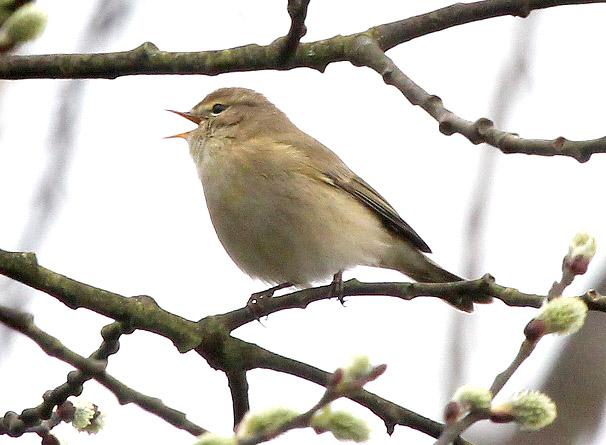
Singing Chiffchaff

RSPB Big Birdwatch 25 – 27th January 2020

Why not join us at Clara Vale Nature Reserve this Saturday 25th January, when once again the Conservation Group are supporting this national event . You can help us to identify and count the birds we see for one hour between 10:30 and 11:30am.

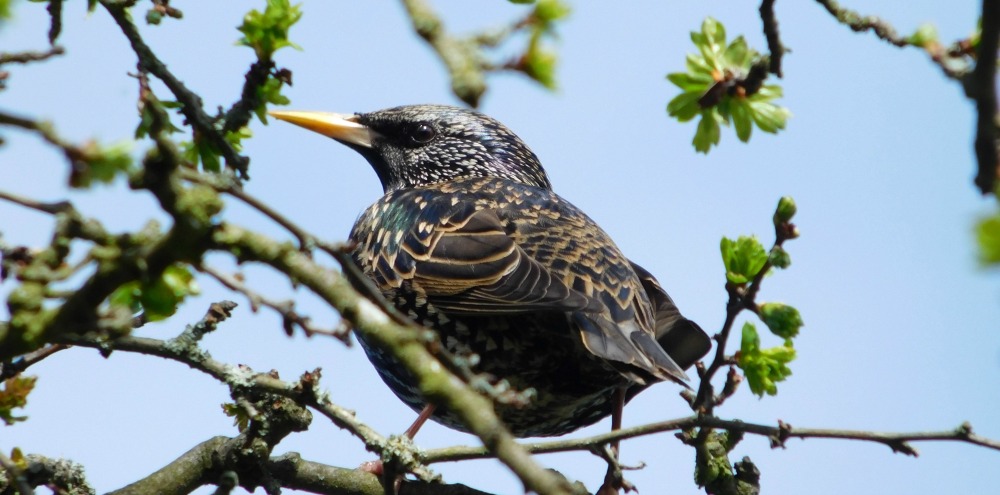
Starling

You don’t need to be an expert, or even count the birds yourself.  There will be keen birdwatchers to help you identify the species of birds that visit the reserve. Both the Alex West and Woodland hides will be open, and we will have free loan binoculars to use.

There will be free refreshments (and no doubt some irresistible cake), plus a couple of free children’s activities too.

We don’t make any charges for this volunteer-run event, however any donations are welcome and all go to the upkeep of the Reserve and bird sanctuary.


Join us for a Bat Walk !

Tuesday 3rd September 7.45pm

Come and learn about the wonderful world of bats!  Discover which species are living around Clara Vale with regional bat experts Peter Shield (Ecologist Gateshead Council) and Clare Rawcliffe (Ecologist South Tyneside Council), both are members of the Durham  Bat Group. They will be bringing their bat detectors along for an evening stroll around the nature reserve and  countryside surrounding the village.

Find out more about bats in Gateshead

Meet at Clara Vale Village Hall at 7.45pm. All welcome.  Please note that in the event of bad weather this walk may need to be cancelled at short notice.

Found Sound: Special Event 30th March 2019

Clara Vale is fortunate to currently have an artist in residence.  Helen Collard is spending time here,  supported by Monfish Production and Arts Council England, working on a project about creating art in non-arts spaces to make site-specific and site responsive work.

Found Sound is a new sound piece inspired by Clara Vale, the village and its people. Experience the soundscape of the familiar: the hidden and some imagined sounds of Clara Vale in the unique, intimate setting of the Alex West hide in the Nature Reserve, including the dawn chorus, Barbaras bees, pond life, electromagnetic fields and electric currents from plant life, all of which are combined with human voice and piano to make a special piece unique to Clara Vale.

The Alex West bird hide is small and quiet evening setting, and there are four slot times for the perfomance on 30th March, meet at the Village Hall, 6:10pm (sold out), 6:50pm, 7:30pm, 8:10pm.

Please meet at the village hall 20 minutes before your allocated time to register your arrival for the event.  Refreshments will be served!

Tickets are already on sale and booking is essential, click here.

Please wear warm, comfortable clothing and shoes suitable for walking on muddy or uneven paths.  All children and young people under 16 years of age must be accompanied by an adult.